How to Take Down a Bunk Bed Safely
Work from the top down, with two adults, and do not force anything. Taking a bunk bed apart is roughly assembly in reverse, so the manual comes first if you still have it (JustBunkBeds). After that comes a question most guides skip: is this bed safe to hand to another family?
Before you start
- Find the manual, or look up the model online
- Take photos of the joints, which help if a part will not move
- Have a second adult on hand. On wood models this matters most
- Clear the floor, because the long rails need room to come down flat
- Keep children out of the room
Can yours be separated?
Some bunk beds are designed to split into two twins. Others are not. Check the paperwork before you plan around it, since a bed that looks like two stacked frames may not stand safely on its own.
The order
- Take off all bedding and both mattresses.
- Remove the ladder, plus any shelves or guard pieces that bolt on.
- Take out the slats on the top bunk, leaving any center support until last.
- Take off the guardrails.
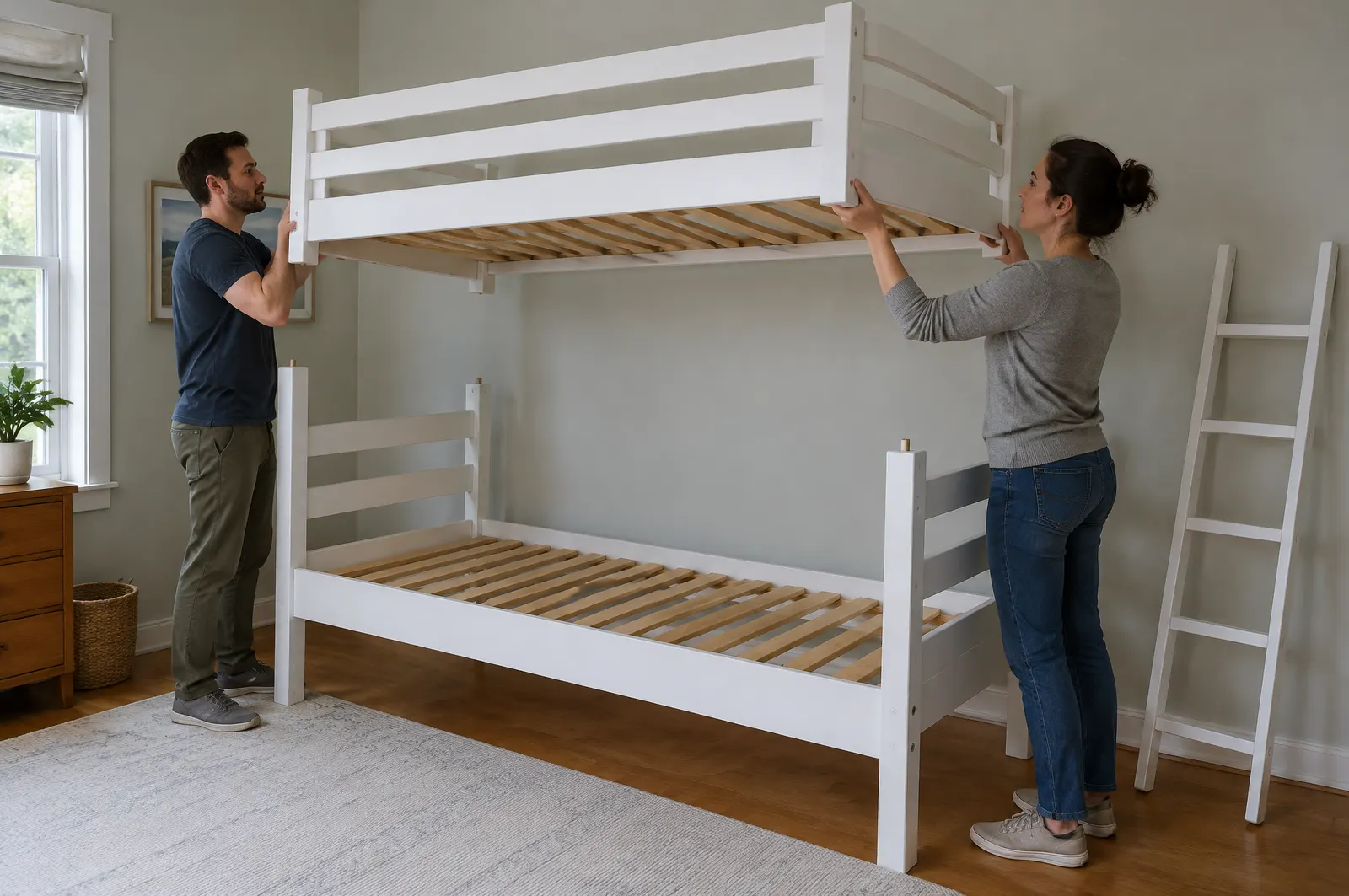
- With one adult at each end, lift the top bunk straight up off its pins or brackets and set it down.
- Take the top bunk's frame apart on the floor.
- Take apart the lower bunk: slats, then rails, then ends.
- Bag the hardware and label it.
This follows the order in JustBunkBeds' guide. If a part will not move, stop and find out how it is connected before you put more force on it.
Lofts and stair units
Loft beds and beds with stair storage carry weight differently. The stair unit may be holding up one side of the upper bed, so read the manual and do not remove it first. If there is no manual, get a second opinion before anyone unbolts it.
Before you pass it on
Federal bunk bed rules bind makers and sellers, and they apply to beds made or imported on or after June 19, 2000. They do not tell a family what to do with an old bed. They still make a good checklist, and CPSC gives this same list to resellers (CPSC Resellers Guide). Reassemble the bed and go through it with a tape measure:
- At least two guardrails on the top bunk, one on each side (CPSC)
- The rail tops at least 5 inches above the top of the mattress
- No openings larger than 3 1/2 inches within a guardrail, or between it and the mattress foundation
- Upper end structures with no openings over 3 1/2 inches
- Lower end structures with no openings over 3 1/2 inches, unless they are at least 9 inches
- Ladder openings greater than 9 inches or smaller than 3 1/2 inches
- Nothing sticking up more than 3/16 inch above the top of an end structure or guardrail on the upper bunk
- Every screw and part present, and on metal beds no cracks around the corner welds
- A warning label on the inside of an upper end structure (16 CFR 1513.5), which should say not to let a child under 6 on the upper bunk (CPSC test manual)
- Not on the CPSC recall list
CPSC tells resellers to destroy a bed that does not have these features. That advice is written for businesses, but the reason applies at home: CPSC counted 50 deaths of children from bunk bed entrapment or strangulation between 2009 and 2018, and 63% were 3 or younger. A bed that fails this check is safer gone.
If it is not worth passing on
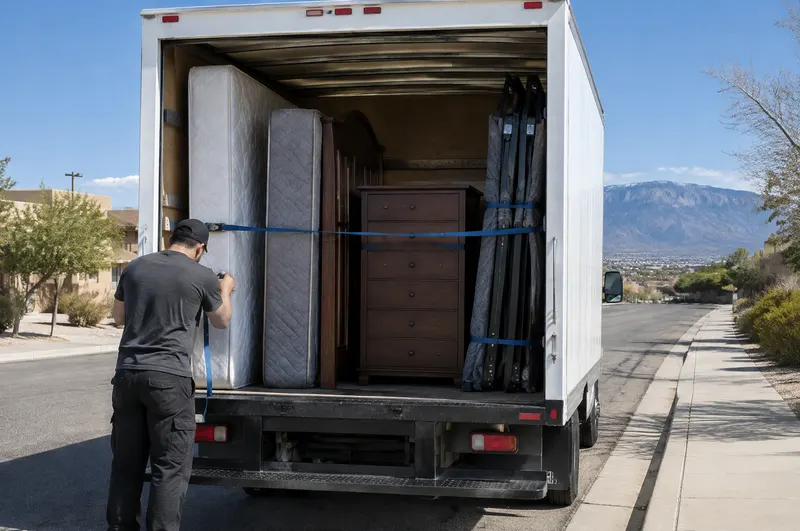
A bed that fails the check should not go to another family. The City of Albuquerque's large item pickup names bed frames and mattresses, and the pieces need to reach the curb (City of Albuquerque). If the bed passes, Beds4Kidz says twin and bunk sizes are what it needs most. To have it taken down and carried out, see bunk bed removal.